
What is a Semi Trailer? Your Complete Australian Guide
Across Australia’s vast road network, you’ve likely seen these powerful transport combinations moving everything from construction equipment to consumer goods. For anyone involved in freight, logistics, or heavy transport, understanding what a semi-trailer is becomes essential. At Midland, we’ve spent over two decades designing and manufacturing these vital transport solutions for Australian businesses.
Understanding Semi Trailers: The Basics
A semi trailer is a cargo-carrying vehicle without a front axle, designed to be pulled by a truck tractor (prime mover). The term semi means it's only partially self-supporting. It needs the truck's fifth wheel coupling to support its front end. When connected, the combination becomes a semi truck trailer (or semi trailer truck) that's perfect for Australia's long-haul transport needs.
Semi Trailer Dimensions Australia: Size Specifications
Semi trailer length regulations in Australia are governed by the National Heavy Vehicle Regulator (NHVR). Key semi trailer dimensions Australia include:
Standard semi trailer length: Up to 19 metres for most configurations
Semi trailer width: 2.5 metres standard
Semi trailer height: Up to 4.3 metres
The total semi trailer truck length can extend up to 26 metres for B-Double configurations, making them incredibly efficient for moving large loads across Australia's vast distances.
Types of Semi Trailers: Finding Your Perfect Match
Understanding types of semi trailers helps you choose the right equipment. The main different types of semi trailers include:
Drop Deck Semi Trailers
Drop deck semi trailers are among our most popular options at Midland. These semi drop deck trailers feature a lowered deck height for easier loading of heavy machinery and equipment.
Flat Top Trailers
Traditional flat deck semi trailer types ideal for general freight, containers, and standard cargo transport.
Specialised Options
From refrigerated units to livestock trailers, there are numerous specialised types of semi trailers for specific industry needs.
Midland's Semi Drop Deck Trailer Solutions
At Midland, oursemi drop deck trailers are expertly designed for Australian conditions. Here's what makes them special:
Key Specifications
Axle Configurations: Tandem, Tri, or Quad Axle options for maximum flexibility
ATM (Aggregate Trailer Mass): Up to 45 tonnes capacity
Payload: Up to 32 tonnes for serious hauling power
Length Options: Up to 50 ft to accommodate various cargo sizes
Suspension: Choose between Air or Spring suspension systems
Customisation Features
Axle Options: Lift and Steer axles available for enhanced manoeuvrability
Deck Materials: Checker Plate or Bissaloy deck options for durability
Combing Styles: Flush, TFB, or C-channel configurations
Container Pins: Up to 3-way container pin options for versatile loading
Combination Ready: B Double or Road Train compatible designs
Safety & Compliance
All our trailers include state-of-the-art plug-and-play wiring harness and multivolt LED lights, ensuring excellent visibility and full compliance with Australian road safety standards.
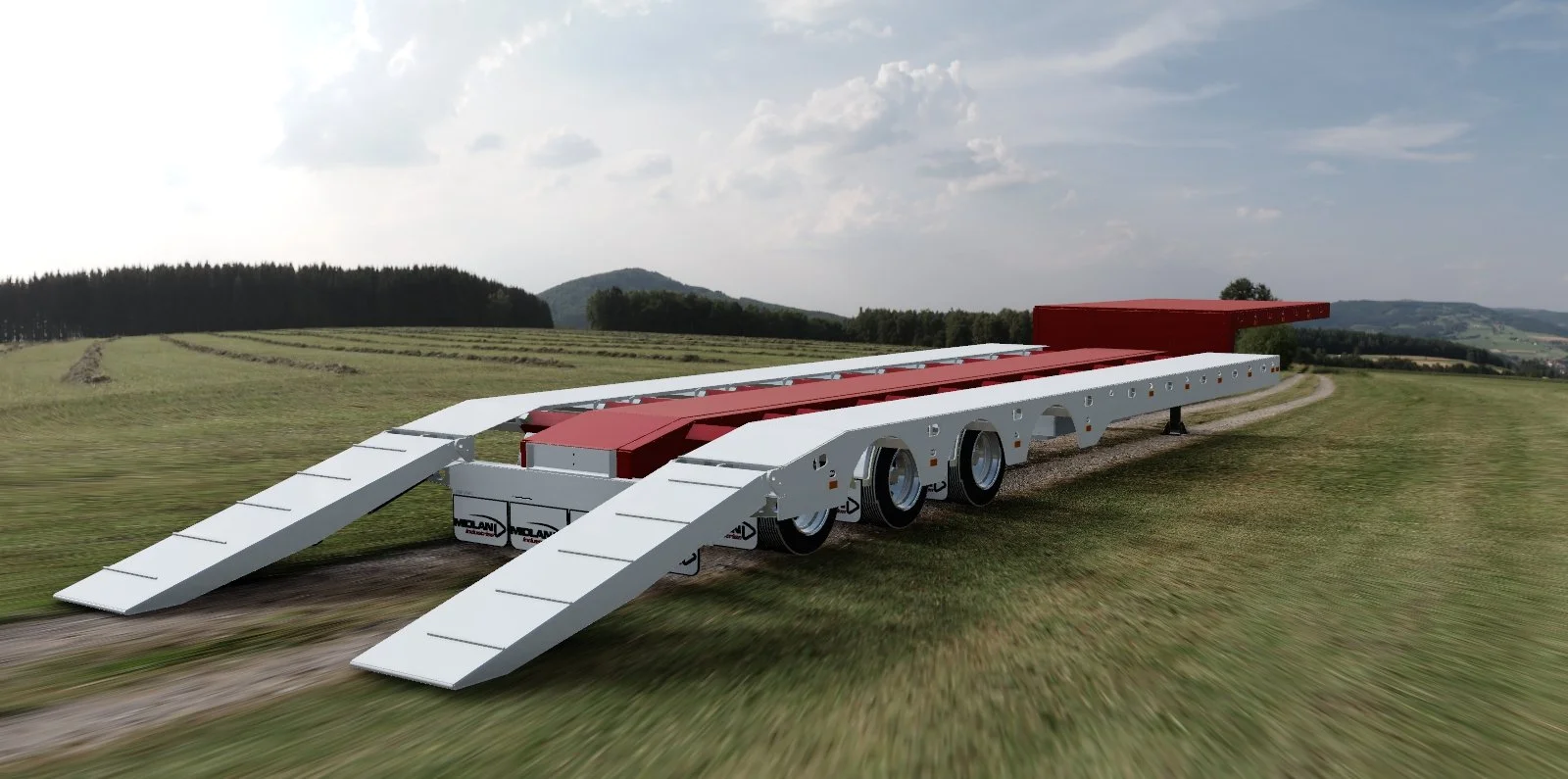
Midland Semi Drop Deck Widener Trailer
What Makes Midland Different?
Australian-Made Excellence
We use only high-quality, Australian-made steel and components. All materials are sourced locally, supporting Australian manufacturing while ensuring superior durability for harsh Australian conditions.
Custom Solutions
Beyond our standard range, we specialise incustom trailers tailored to your exact requirements. Whether you need specific semi trailer size configurations or unique features, our team delivers solutions that exceed expectations.
Complete Range
Exploreour trailers including:
Dog Trailers for additional cargo capacity
Tag Trailers for specialised applications
Deck Wideners for oversized loads
Choosing the Right Semi Trailer
When selecting your ideal semi trailer truck size, consider:
Load Requirements: Your typical payload determines the size of semi trailer and structural specifications needed.
Operating Routes: Different length of semi trailer australia regulations apply depending on where you'll be travelling.
Loading Methods: How you load cargo influences whether you need drop deck, flat top, or specialised designs.
Future Growth: Choose semi trailer dimensions that accommodate your business expansion plans.
Standard Semi Trailer Length Configurations
Length of a semi trailer options at Midland include:
Standard configurations up to 19 metres
Semi trailer length australia compliant designs
B-Double compatible units up to 26 metres total length
Road train configurations for approved routes
Our expert team ensures your length of semi trailer choice maximises efficiency while meeting all regulatory requirements.
Why Choose Midland for Your Semi Trailer Needs?
With over 20 years of experience in tractor and semi trailer types, we understand Australian transport challenges. Our commitment to quality means every trailer is built to withstand the test of time, delivering exceptional performance across diverse applications.
From road construction to earthmoving, our drop deck semi trailers and standard configurations have earned a solid reputation for reliability and effortless loading experiences.
Ready to Get Started?
Whether you're looking for drop deck semi trailers for sale or need a custom solution, Midland delivers Australian-made quality that exceeds expectations. Our dedicated teams in Parkes NSW and Kyneton Victoria are ready to help you find the perfect semi trailer solution.
Understanding what is a semi trailer truck is just the beginning. The real value comes from partnering with experts who can deliver exactly what your operation needs.
Contact us today to discuss your requirements, orrequest a quote for your next project. Experience the Midland difference, where Australian craftsmanship meets uncompromising quality.
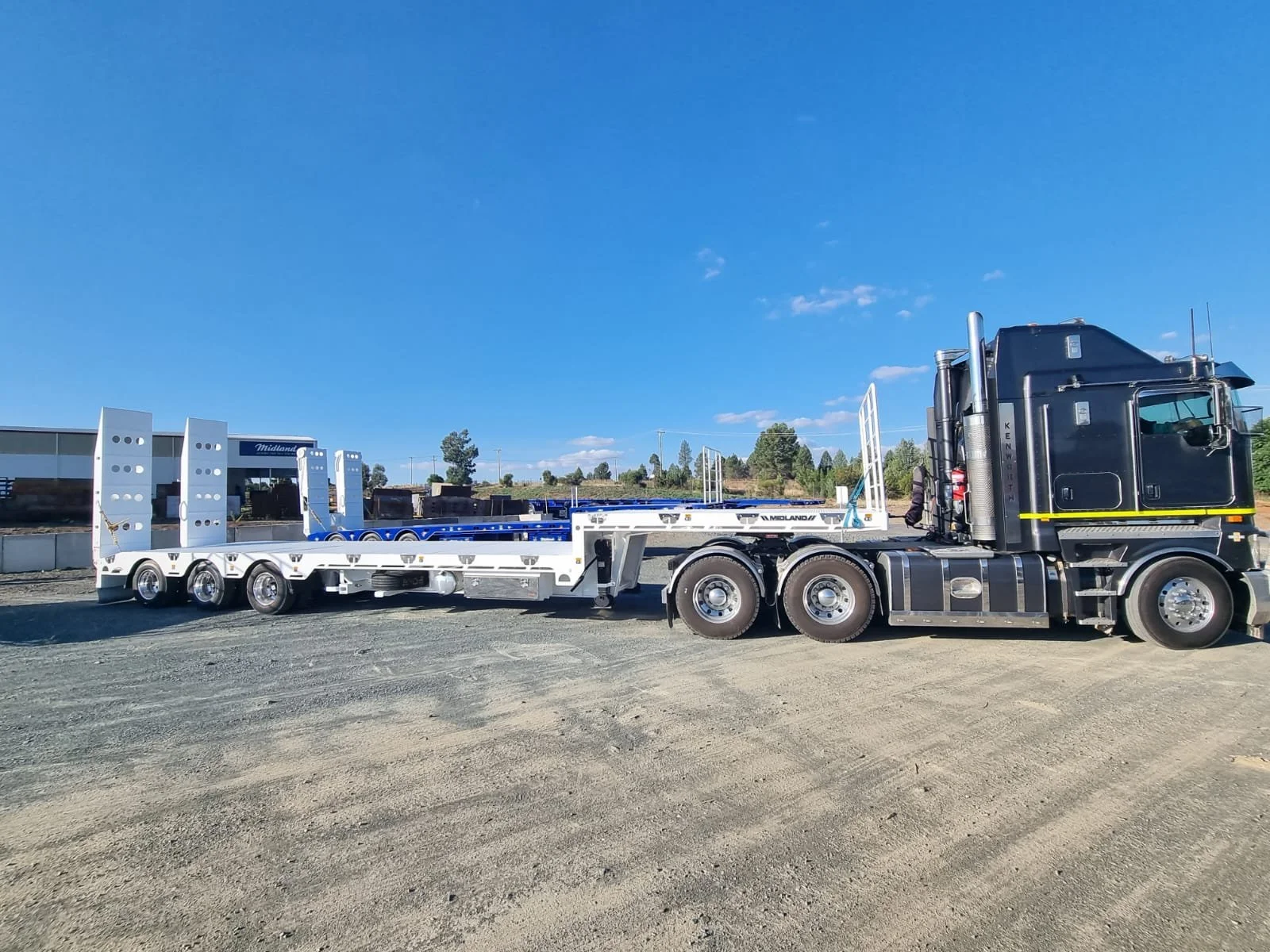
Midland Semi Drop Deck Tri Axle Trailer
Semi Trailer Specifications
| Specification | Details |
|---|---|
| Gross Combination Mass (GCM) | Up to 42,500 kg (general access) |
| ATM, Tandem axle | Up to 27,000 kg |
| ATM, Tri axle | Up to 34,000 kg |
| Payload | Up to 28,000 kg (configuration dependent) |
| Max combination length (NHVR general access) | 19.0 m |
| Axle configurations | Tandem (2-axle), Tri axle (3-axle) |
| Kingpin | 50 mm standard · 90 mm heavy duty |
| Floor materials | Hardwood timber, Hardox steel, checker plate |
-
A semi trailer is a trailer without a front axle, designed to be towed by a prime mover via a fifth wheel kingpin coupling. The term “semi” refers to the fact that the trailer is only partially self-supporting. The front rests on the prime mover, which carries part of the load. In Australia, semi trailers are one of the most common heavy vehicle configurations, used across virtually every freight sector.
-
A semi trailer has no front axle and is supported at the front by the prime mover’s fifth wheel. A full trailer is self-supporting with axles at both ends and is towed by a drawbar. It does not rely on the towing vehicle for support. Semi trailers are the dominant configuration in Australian linehaul and construction freight. Full trailers are used in road train combinations as the second or third trailer.
-
Under standard access conditions, a semi trailer combination can carry up to 42.5 tonnes gross combination mass (GCM). The trailer’s ATM determines how much the trailer itself is rated to carry. Midland semi trailers are built to ATMs of up to 45 tonnes for standard configurations, with higher-rated options available under a PBS assessment.
-
Semi trailers are available in tandem axle (two-axle group) and tri axle (three-axle group) configurations. Tandem axle suits lighter loads and tighter turning. Tri axle carries heavier loads with better weight distribution. Suspension options include spring leaf and airbag. Axle spacing can be optimised for PBS assessments or specific route access conditions.
-
The fifth wheel is the coupling mechanism between the prime mover and the semi trailer. The trailer’s kingpin (50mm or 90mm diameter) locks into the fifth wheel plate on the prime mover, allowing the trailer to pivot horizontally when cornering. The fifth wheel connection also transfers part of the trailer’s load weight onto the prime mover’s drive axle.
-
Under Australian road vehicle standards, a semi trailer combination (prime mover plus trailer) has a maximum overall length of 19 metres. The trailer body itself is typically up to 13.7 metres for a standard configuration. Longer combinations require a PBS assessment and may be restricted to approved routes or require permits.
-
Semi trailers carry the full range of road freight: palletised goods, bulk commodities, construction materials, machinery, containers, and oversized equipment. The trailer type determines what freight it suits: flat tops for open freight, drop decks for tall loads, skel trailers for ISO containers. Semi trailers are the backbone of Australian linehaul freight, covering both metro and long-haul interstate routes.
-
A semi trailer is a single trailer pulled by a prime mover, with a maximum combination length of 19 metres. A B-double is two semi trailers connected in series behind a prime mover, with a maximum overall length of 25 metres. B-doubles have higher payload capacity but require higher mass management (HML) access and are restricted from some roads that a standard semi trailer can access.
-
ATM (aggregate trailer mass) is the maximum total mass the trailer is rated to carry including its own weight. GTM (gross trailer mass) is the portion of that mass carried on the trailer’s own axles, excluding what rests on the prime mover’s fifth wheel. GCM (gross combination mass) is the total rated mass of the prime mover and trailer combined. These figures determine legal payload, road access conditions, and registration requirements.
-
Yes. Midland designs and manufactures semi trailers to order at its factories in Parkes NSW and Kyneton Victoria. Every trailer is built to your load requirements, axle configuration, suspension type, and any relevant PBS or route access conditions. Custom options include deck length and width, kingpin size (50mm or 90mm), floor material, coaming height, headboard, toolboxes, and tie-down configurations.